Back to School Plaid: A Playful Font for Creative Projects
When a design needs a dose of nostalgia and vibrant energy, the right typeface can set the entire mood. School Plaid is a premium font that does exactly this, offering a creative font solution built for projects that demand a cheerful, handmade aesthetic. It’s not just a set of letters; it’s a collection of visual textures that immediately evoke a sense of warmth and playful craftsmanship.
Understanding the Visual Character
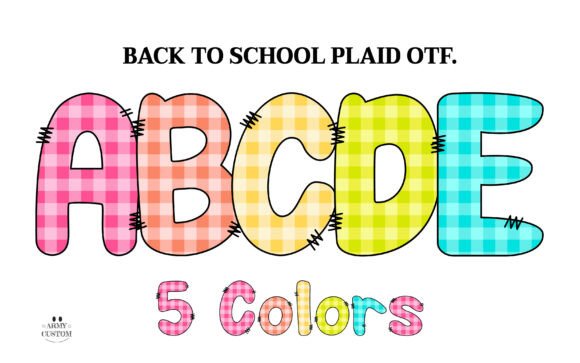
At its core, School Plaid is a display font defined by its bold letterforms and intricate fill. Each character is not a solid color but is instead filled with a classic gingham-style plaid pattern. This pattern is available in five distinct, cheerful color variations: pink, orange, yellow, green, and blue. The effect is immediate and striking, transforming simple text into a graphic element. Adding to its charm, each letter is outlined with a subtle, hand-stitched detail. This mimics the look of embroidery or cross-stitch, reinforcing the handwritten font feel and adding a layer of tactile, whimsical texture that flat digital typefaces often lack.
The personality of this typeface is unapologetically fun, nostalgic, and approachable. It leans into a craft-inspired aesthetic that feels personal and inviting. In the landscape of modern typography, which often prioritizes clean minimalism, School Plaid stands out by embracing pattern and color as integral parts of its design. It’s a font that doesn’t just convey words; it conveys a specific feeling—think of fresh school supplies, cozy quilts, and handmade gifts.
Where This Font Truly Shines
Identifying the right project for a font as distinctive as School Plaid is key to its effective use. Its strengths lie in applications where visual impact and thematic resonance outweigh the need for subdued neutrality.
For Educators and Classroom Projects: This is a natural fit. The font’s theme is directly aligned with its name, making it ideal for creating bulletin board headers, classroom rule posters, worksheet titles, and award certificates. It instantly creates an engaging and friendly environment for students. The included bonus PNG files are particularly useful here, allowing for easy drag-and-drop design in any program, bypassing the need for advanced software.
Children’s Publishing and Marketing: Authors, illustrators, and marketers targeting a young audience will find this display font invaluable. It works beautifully on book covers for early readers, chapter titles in middle-grade fiction, or promotional materials for children’s events. For packaging design of kids’ products—from snacks to craft kits—the font adds a layer of playful authenticity that resonates with both children and parents.
Brand Identity and Niche Businesses: Entrepreneurs running businesses with a handmade, vintage, or family-oriented focus should consider this font for their brand identity. A bakery specializing in nostalgic treats, a craft supply store, or a tutoring service could use School Plaid in their logo design or marketing headlines to communicate their core values instantly. It pairs surprisingly well with a clean sans serif font for body copy, creating a balanced hierarchy where the plaid elements provide accent and personality without sacrificing readability.
Digital Content and Social Media: In the fast-paced world of social media graphics, stopping the scroll is everything. School Plaid’s vibrant patterns and bold shapes make it excellent for Instagram story headers, Pinterest pin titles, YouTube thumbnail text, and promotional graphics for back-to-school sales. Its inherent visual texture ensures it stands out in a crowded feed.
Practical Guidance for Designers and Creators
Before integrating any creative font into a professional workflow, a practical evaluation is necessary. Here’s how to approach working with School Plaid.
Evaluating Project Fit: The first question is about tone. Does your project benefit from a whimsical, handmade, and slightly retro aesthetic? If the goal is to convey cutting-edge modernity or serious corporate formality, this is likely not the right tool. However, if the aim is to evoke warmth, nostalgia, fun, and creativity, it’s a strong candidate. Always consider your audience’s expectations.
Technical Considerations and Font Pairings: It’s crucial to note that School Plaid is a color OTF font. This advanced format allows for the multi-colored plaid fill but comes with compatibility constraints. It functions fully in recent versions of Adobe Photoshop CC and Illustrator CC. It is not compatible with many other design platforms, including popular cutting machines like Cricut. This is where the included bonus PNGs become essential, offering a flexible workaround. For font pairing, simplicity is your ally. Let School Plaid handle the headlines and display text. Pair it with a highly legible, neutral sans serif font like Open Sans, Lato, or Montserrat for body text. A classic serif font could also work for a more vintage editorial feel, but test for visual harmony. Avoid pairing it with other decorative or script fonts, as this can quickly lead to visual clutter.
Readability and Application: Given its detailed texture, this font is best used at larger sizes. It is not designed for long paragraphs of body copy. Use it for short, impactful text: titles, headings, labels, and single-word callouts. Ensure there is sufficient contrast between the font’s background and your design’s background to maintain clarity. The hand-stitched outline helps define the letterforms, but a busy background can still compete.
Licensing and Assets: For commercial use, always verify the font’s licensing terms. A quality commercial font will come with clear guidelines for use in client work, merchandise, and digital products. The inclusion of bonus PNG files is a significant value-add, providing immediate usability across a wider range of software and projects, from digital designs to printed materials.
Incorporating a typeface like School Plaid is about more than just changing a font—it’s about importing a specific mood and design language. Used thoughtfully, it becomes a powerful tool in your design assets library, capable of transforming ordinary text into a memorable visual statement that connects with audiences on an emotional level. Its true power lies in its ability to make a design feel instantly personal, crafted, and full of character.